
How to Build a Strong Deck in Slay the Spire 2
Deckbuilding is the core skill of Slay the Spire 2 and the key difference-maker between winning and losing runs. Here’s how you can improve on your decisions, and what factors you should keep in mind.
Why Skipping Cards Is Often the Best Play
Collecting cards from combats may seem free, but it comes at a cost: your draw. Keep the Skip button in mind, as a small deck can get key cards into play earlier, cycle back to them faster, and line them up at the right moment.
Scrutinize your card picks to ensure they either directly answer a threat like investing in powerful scaling for the late-game bosses and drafting multi-hit moves (like removing Vantom’s buffs in the Act 1 boss fight), or can be indirectly converted into value, like pursuing extra Elites for Relics and saving HP to let you upgrade at a campfire instead of resting.
Short-Term Survival vs. Long-Term Success
Your main priority is drafting to handle your current threats. It’s reasonable to lug around late-game cards before their prime, but it’s a balancing act. You’re not obligated to play them in every short fight, so accept that they may be a dead draw in the interim. Including them is less of a burden if you have some draw cards to muscle past them. It’s realistic to carry one compact late-game card early on, but if it means passing up on an immediately impactful pick, or if it relies on finding specific enablers, consider skipping it.
Understanding Card Synergy in Slay the Spire 2
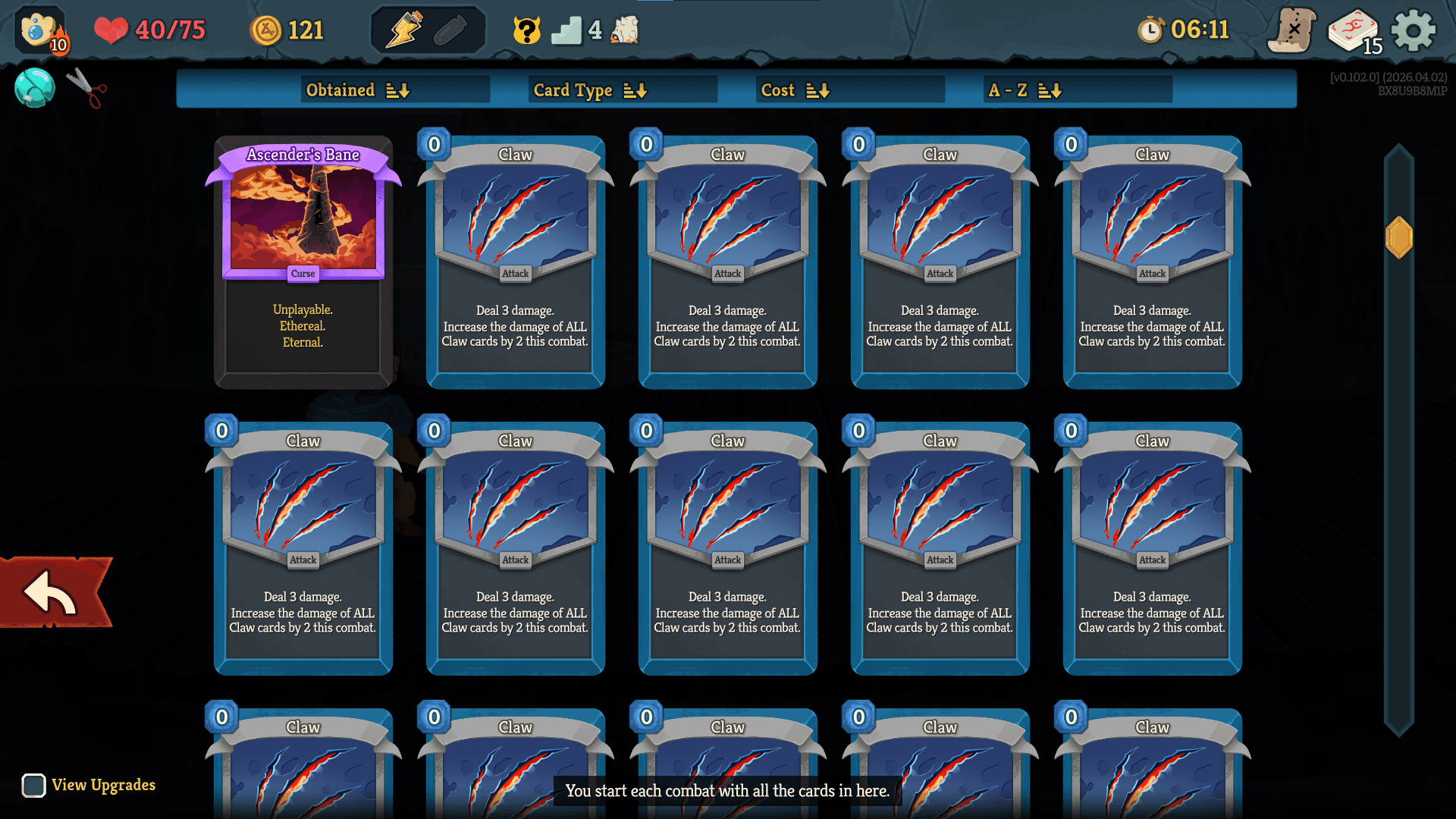
Every deck is different, so be on the lookout for new opportunities for cards that amplify each other. Synergies range from effects that explicitly trigger from mechanics like Sly or Doom, to emergent combos like how additive effects get more mileage out of many smaller effects.
For example, Strength gives a flat increase per hit, so two 1-Energy Pommel Strikes use it more effectively than a single 2-Energy Cinder. Browse our character overviews to familiarize yourself with the natural archetypes of each character to get an idea of the main builds that are safest to speculate into. Synergies can be seductive, so make sure that a complementary card pick will actually address a deficiency of your deck.
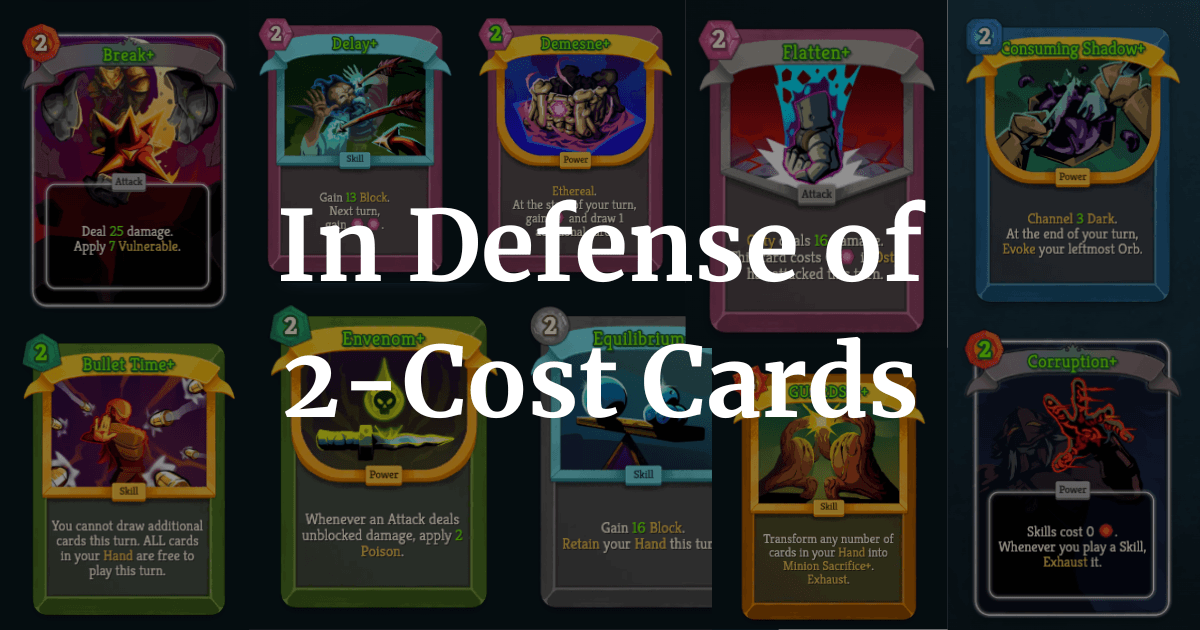
Read Baalorlord's tale about a rookie and a seasoned veteran embarking on an adventure in the Spire to learn the value of 2-Cost cards in Slay the Spire 2.
Balancing frontload and scaling is also key. Frontload refers to the immediate-impact effects that shorter fights demand, especially early on. This starts out as a high-priority focus on preserving HP in regular encounters. It’s also an asset in some late-game fights with multiple enemies, if a quick kill can ease the pressure and let you stabilize. You can read more about this idea, alongside Block Density and Upgrade density in Baalorlord’s core deckbuilding concepts article, which offers an advanced breakdown of stats.
As the run progresses, fights will demand that you invest in playing scaling effects that have a delayed, sustained, or progressive payoff. Powers are your main source of scaling. For example, Feel No Pain gives you Block every time you Exhaust a card for the rest of the fight. In addition, the concept of scaling can even be abstracted to the Exhaust effect itself, since thinning your deck from undesirable cards helps you draw the key pieces faster after subsequent reshuffles.
When to Upgrade Cards vs. When to Draft New Ones
Upgrades increase your output without the burden of drawing through additional cards, but not all upgrades are equal. If your best Smith target at a campfire is the standard +3 frontload upgrade to your damage or Block, you’re better off skipping the fire to find some better cards.
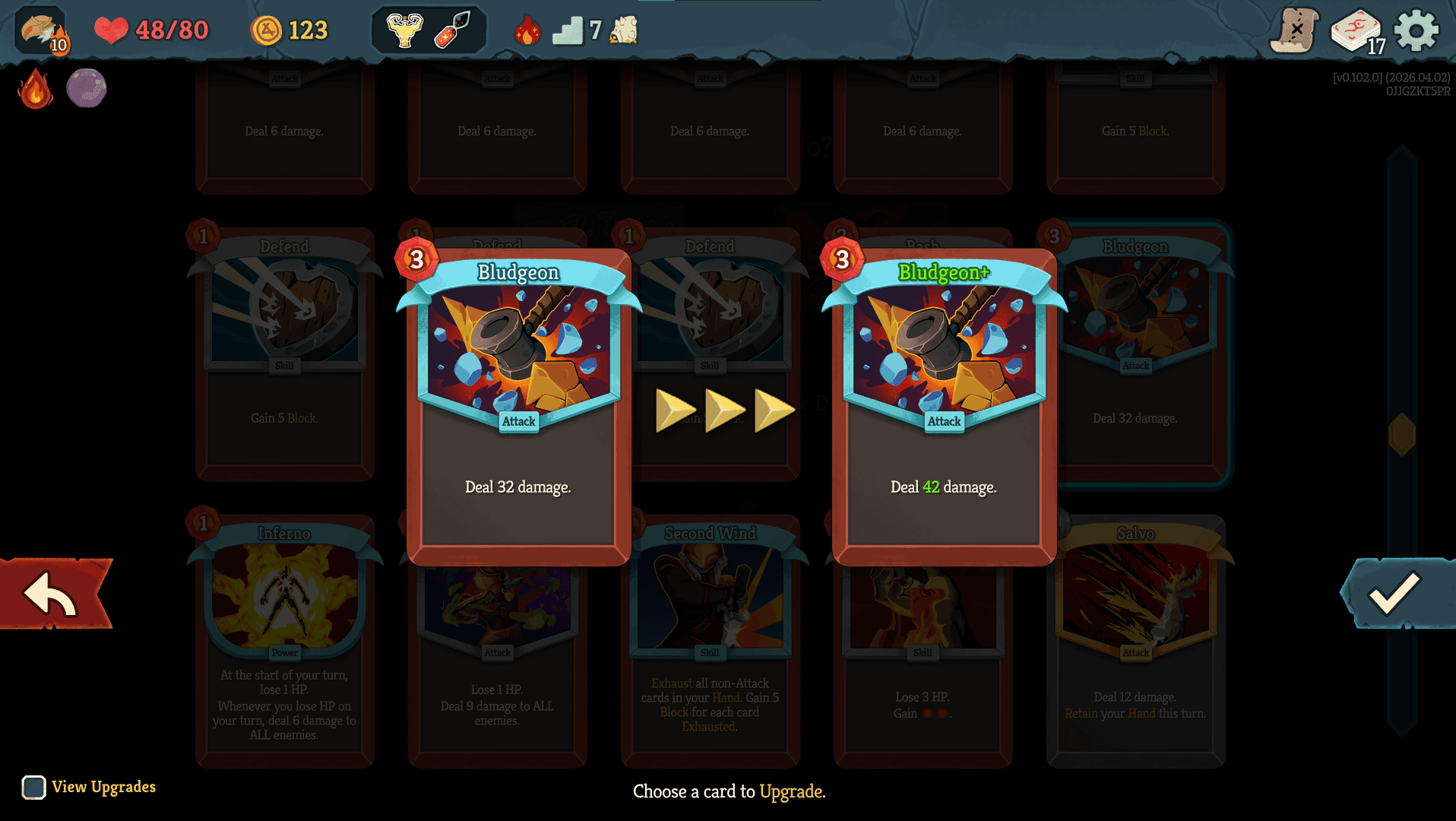
Certain dense damage cards like Bludgeon offer hefty damage upgrades that can be worth pursuing early on, but be aware that those effects likely won’t maintain relevance throughout the run. Despite this, the upgrade can still extract long-term value by allowing you to omit an extra frontload card from your draft. It’s a worthwhile investment to improve your draw consistency in the future.
How Deck Size Affects Your Runs in Slay the Spire 2
There isn’t a card count you should specifically aim for, but you can still be mindful of what dynamics may shift. Deck sizes range between 20 and 40 cards.
Big decks may dilute your best cards, but also your Basic cards and Curses, and you’ll have better resistance against enemies that flood your deck with Status cards. Relying on a key card can introduce some nasty outliers if it ends up bottom-decked, especially if you’re lacking draw tools. Big decks often get their start amassing an early arsenal by hunting Elites, resulting in more Relics. Conversely, big decks rely more on Relics for consistent output since those aren’t draw-dependent. Big decks can punish you harder for leaving important cards out of your mid-turn reshuffle, which is an invaluable skill you can learn in our Micro Strategy guide.
Small decks offer consistency. You’ll draw your Powers earlier in late-game fights, giving them more time to cook. A tight draft allows for the alternative scaling solution of exhausting down to a rapid cycle of high-impact cards, including combo pieces that line up, such as a loop of draw and energy.
Enchantments also open up an additional layer of creativity. Every excess frontload card you take can have a considerable impact on the late-game output of a small deck, so you’ll need to get away with less, holding your combat decisions to higher scrutiny. Small decks also have a greater appreciation for upgrades.
Putting It All Together
Strong Slay the Spire 2 deckbuilding comes down to adaptability. The best cards for your deck prepare for relevant threats and stay open to synergies. Adjust your balance of frontload and scaling as the run evolves. Whatever size your deck ends up being, be mindful of its consistency and how it will scale during your run.
Hungry for more Slay the Spire 2 knowledge? Be sure to check out our Getting Started guide!