

Growing up I played a lot of Magic: the Gathering drafts. You’d sit down at a table with seven other people, each open a pack of 15 cards, take one, and pass the rest left. Do that three times (passing right for the second round) and you’d have a deck you could play against the rest of the table. I loved the way that I saw my deck coming together over the course of 45 card picks, trying to predict which strategies my opponents were going for so that I could position my own strategy to take advantage of cards they didn’t want. Sometimes actually playing the matches felt like a chore; I’d already gotten to build my deck, what was the point of shuffling it and having to play games of Magic?
Enter Slay the Spire.
Spire revolutionized the deck-building genre by challenging you to win with your deck while you were still in the process of building it. At the start of the run, while your deck was still low on good cards and synergies, you fought against appropriately straight-forward enemies. As you progressed and managed to make your deck stronger and more focused, the enemies scaled along with you to provide fresh challenges and keep challenging your problem-solving abilities.
This format challenges all pre-existing deckbuilding heuristics. The “best” cards might actually be quite bad to take at the start of the game, because you might be about to fight against four low-health Gremlins who will attack you for 20 damage per turn. Not much use in having an awesome longterm scaling card, or a card which beautifully synergizes with the character’s best strategy, if you’ll be dead before you get to draft any cards which work with it.
One of the heuristics I leaned on from previous games to get through this new challenge was the idea of cards having “jobs”. This was something I’d used a lot for building Constructed decks in Magic. Wrath of God was for clearing masses of creatures. Counterspell was for protecting my best card, or countering theirs. These kinds of ideas about what the role of different cards was both informed how to build the best deck to beat the other decks in the format, as well as how to pilot that deck when you were in runs.
So, I stopped looking at Slay the Spire cards and thinking exclusively about how they’d fit into my deck longterm, and started looking at them and how they’d line up with the enemies I was about to fight. 

 Demon Form might beat Time Eater on Floor 50, but if I was on Floor 8 it might be a lot better to take Cleave over it so I could beat Gremlin Gang, since that was the fight I was actually being challenged to solve right now. I’d think about this in the following way:
“Cleave’s job is to beat [the enemies Cleave is good against], I don’t need to take Demon Form right now because I can find something else to do the job of beating [the enemies Demon Form is good against] later”.
Over time I got very good at thinking extremely specifically about the game’s minutiae – there are about 150 turns in most runs of Slay the Spire, and when I’m playing I’m mostly focused on between 5-20 important ones which lie ahead and exactly which cards I’ll need to beat them. Turn 3 against Gremlin Nob, turn 2 against Hexaghost, turn 1 against Slavers, stuff like that. But, before I learned that much, I started off by bucketing cards by the sorts of jobs they could do. These were the jobs I felt were most important:
- Frontloaded Damage
Frontloaded Damage is most important at the start of the run, when enemies are weak and you haven’t had enough time to put together any more complicated strategies yet.
The idea is simple: deal damage, fast.
Strike is not a particularly good card, but it does an okay job of dealing Frontloaded Damage. Lots of Common Attacks are passable Frontloaded Damage cards.
Frontloaded Damage is an important job for your deck to be able to do on turns where enemies aren’t attacking you. Most enemies will scale up in some way if you don’t kill them quickly enough, so not being able to take advantage of those turns to deal damage to them can become very painful. Some enemies deal damage so quickly that you’ll want to deal Frontloaded Damage to them even when they’re attacking you – Gremlin Nob from Slay the Spire 1 is a good example of an enemy like this.
At the start of runs of Slay the Spire, most characters have a high enough need for more Frontloaded Damage that Attack Commons might be better pickups that impressive lategame Uncommons, but you also need to be careful not to take too many cards like this, because later in the run there are other jobs which will increasingly become more important, and if all the cards in your hand are for dealing Frontloaded Damage you likely won’t be able to do anything else.
A good starting point might be to try to add two or three Frontloaded Damage cards to your deck at the start of each run. If you get a relic which helps deal damage you can add fewer, if you want to fight a lot of elites in Act 1 you might want to add one more.
Keep in mind that just because Frontloaded Damage is “best” at the start of the game doesn’t mean it can’t also be important for fights later on. For example: In Slay the Spire 1, the Act 4 Elite fight could sometimes be solved using Frontloaded Damage if your deck was good enough at it, while other decks which weren’t as good at Frontloaded Damage had to find other routes to winning the fight.
1b) Frontloaded Area of Effect Damage
When there are multiple enemies in a fight, you can benefit from having Frontloaded Damage cards which hit more than one enemy at a time. That said, you don’t necessarily need to prioritize these. If your Frontloaded Damage is good enough, Multi-Enemy fights can often be solved by killing one of the enemies as quickly as possible, stabilizing the fight.
Something to think about when being offered a card like Cleave: Does my deck need help against the multienemy fights coming up, or could I get away with taking a different card and solving them using the cards I already have, or perhaps a potion.
- Frontloaded “Block”
Frontloaded Block is for keeping yourself alive when the enemies attack you. On the turns where they attack you, you block. On the turns where they don’t, you attack. Simple enough.
DolphinChemist used to call the beginning phase of the run where your approach to fights was mostly this simple “Knifey-Blocky”, which I have always adored.
I say “Block” here because it’s the default way for characters in Slay the Spire to defend themselves, but keep in mind that there are other options which can work for defending yourself too. 

 Piercing Wail is a classic example of a card which doesn’t technically say “Block” on it anywhere, but which will do a great job of keeping you alive on a turn where you’re getting attacked.
A tricky nuance to Frontloaded Block in Slay the Spire 1 was that it wasn’t particularly good in most of the Act 1 fights. It started being an important inclusion for your deck more towards the beginning of Act 2, once you were done with fights against enemies like Gremlin Nob and Slime Boss. I’m not sure how the balance of Slay the Spire 2 will feel, but that was how it worked in Spire 1, and so you ended up with a hierarchy where the first thing to do was work out how you were dealing damage, and then the second thing to do (once you’d worked out enough damage), was to work out how you were blocking.
- Scaling
“Scaling” is a very open-ended concept in Slay the Spire, but the idea is to put elements into your deck which can somehow make your deck do more and more as fights go on. That might mean one or two cards which work extremely well together and can combo to make you invincible for 12 turns, or it might mean a relic or card which made your other cards better, such that cards which blocked for 5 on turn 1 could be blocking for 15 on turn 3.
In Slay the Spire 1, a little Scaling was often needed to survive the Act 1 boss, but the place where it really started to be important was the Act 2 boss, which was often impossible to beat unless a couple of cards or relics which were specifically good in longterm fights made it into your deck.
Examples of ways to scale the characters toward their lategame builds will have to wait until the game is actually out. Because it stacks on top of working out how to survive to the endgame long, and you have the longest time to choose which cards to take, the “right” ones to take end up being quite tricky to work out. And because your deck is constantly facing fights, you have to make hard choices between taking the “best” lategame scaling options when they’re offered to you, or waiting until later when they start to be particularly valuable and then taking whichever ones you see. Fortunately, there are going to be tons of options to try, and the ones I’ve seen look like they’ll be a lot of fun to build around!
- Card Draw/Deck Manipulation
When all your deck needs to do is deal damage, you don’t have to worry too much about which cards you draw each turn. Just put damage cards into the deck and play them. Simple, right?
By lategame though, your deck will have Frontloaded Damage cards in it which you took for 40 floors ago. It’ll have block cards which won’t be useful at all on turns where you aren’t getting attacked. And it’ll have some scaling cards which you’ll want to be able to draw on safer turns to deploy, but might not be able to utilize if they’re drawn while you’re being attacked for 60.
Because of that, cards which draw toward whichever card you need on the actual turn you’re playing right now end up being very important. The best Relic in Slay the Spire 1 was 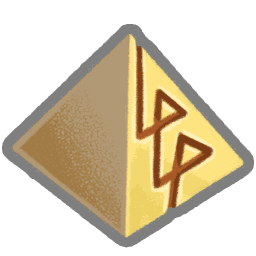 Runic Pyramid, which allowed you to skip your discard phase at the end of each turn. It turns out: if you can play the cards in your deck on the turns where their job is the thing you need to be doing, you tend to win a lot.
Barring having a Runic Pyramid, the main ways you do that are by removing cards which aren’t useful (especially Starter Deck  Strikes and Defends) and by taking some cards which draw cards. It’s often more valuable to play one card which is good this turn than two cards which aren’t, so paying one energy to draw a few cards to look for a good one is often worth it.
And that’s “it”.
Instead of thinking about building a Block archetype, or a Strength deck, or trying to work out how to making a Rare card I get offered on Floor 4 win me the run, when I’m playing Slay the Spire I’m thinking about a few key jobs I need my deck to be able to do, and monitoring how well it’s doing them to make sure it’s keeping up. When I play the game I’m spending at least as much time thinking about what the enemies I might be about to fight demand of me as I am about the actual deck I’m playing.
I put “it” into quotations because there’s endless nuance here. Maybe I’ll skip a Frontloaded Damage card because I have a Damage potion. That’s a fun tradeoff to try to make a decision around. Maybe a particular relic will warp my run enough that a card which doesn’t fit into the jobs I need to do right now ends up actually being worth taking and holding onto for a few floors until it actually becomes good. Maybe a character’s balance will be a little off, so taking certain scaling cards before they’re actually good becomes important because they outperform the other options, or some Frontloaded Damage cards sync up much better with lategame strategies than others, so it’s worth risking skipping one or two looking for one of the best ones at the start of the game.
Working that stuff out is the beauty of the game, to me, and if it seems like an enjoyable angle to approach the game from to you, I hope you’ll give it a go!