
How to Make the Best Map Choices in Slay the Spire 2
Pathing is how you choose which route to take through each act of Slay the Spire 2, and it’s one of the most impactful decisions you make every run, long before you ever draw a card. Use this Slay the Spire 2 map guide to gain a real framework for every decision.
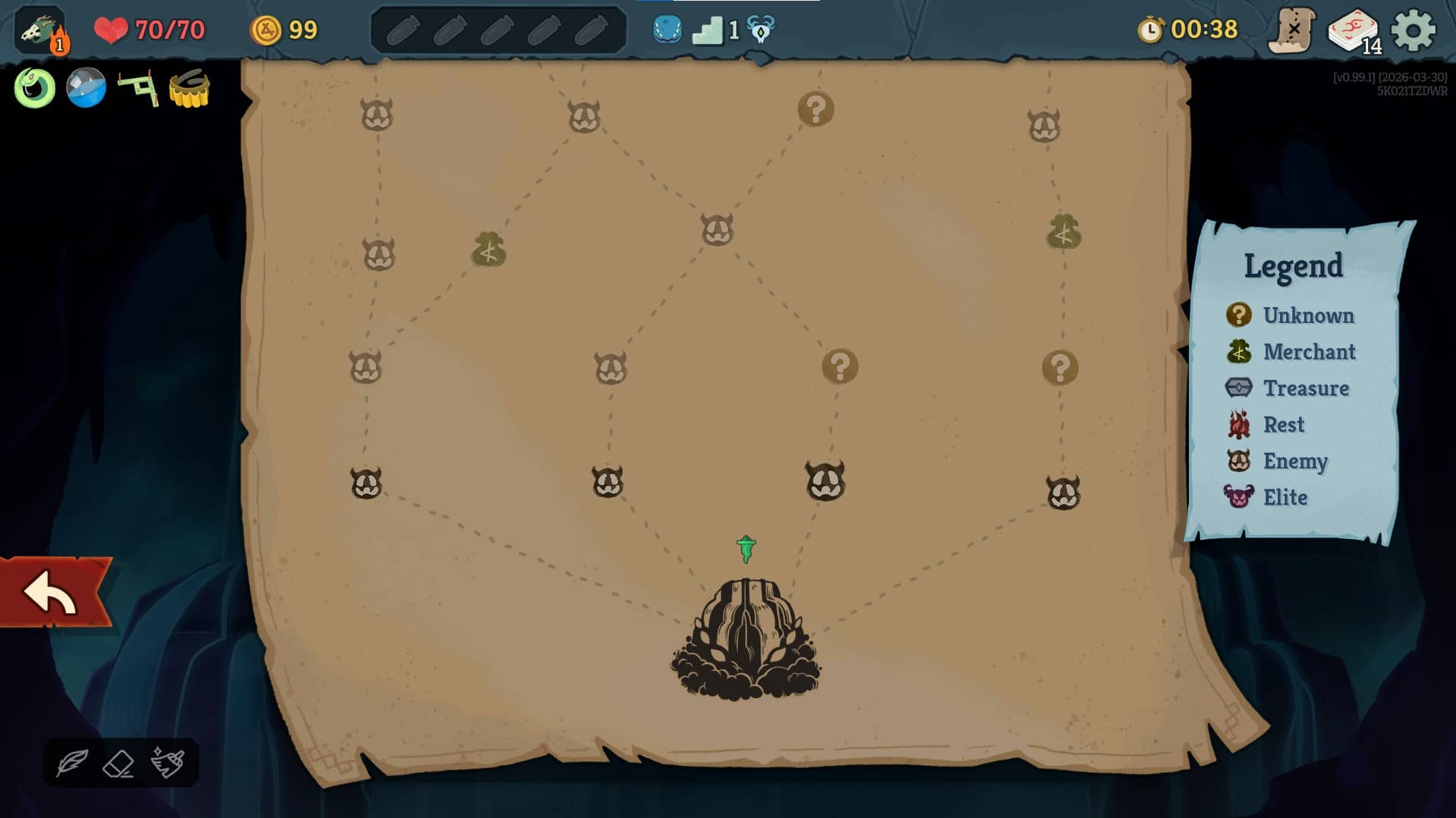
How the Map Works in Slay the Spire 2
Each map contains seven different node types:
- Normal monster encounters
- Elite encounters
- Rest sites
- Enknown rooms (the question mark nodes)
- Treasure rooms
- Merchant shops
- The boss at the top
The game procedurally generates a new map every run, so no two attempts share the same layout.
A few things are true regardless of which path you take, however. There will always be a rest site right before the boss encounter, and treasure rooms are guaranteed at the halfway points. Everything else comes down to the choices you make on the way up.
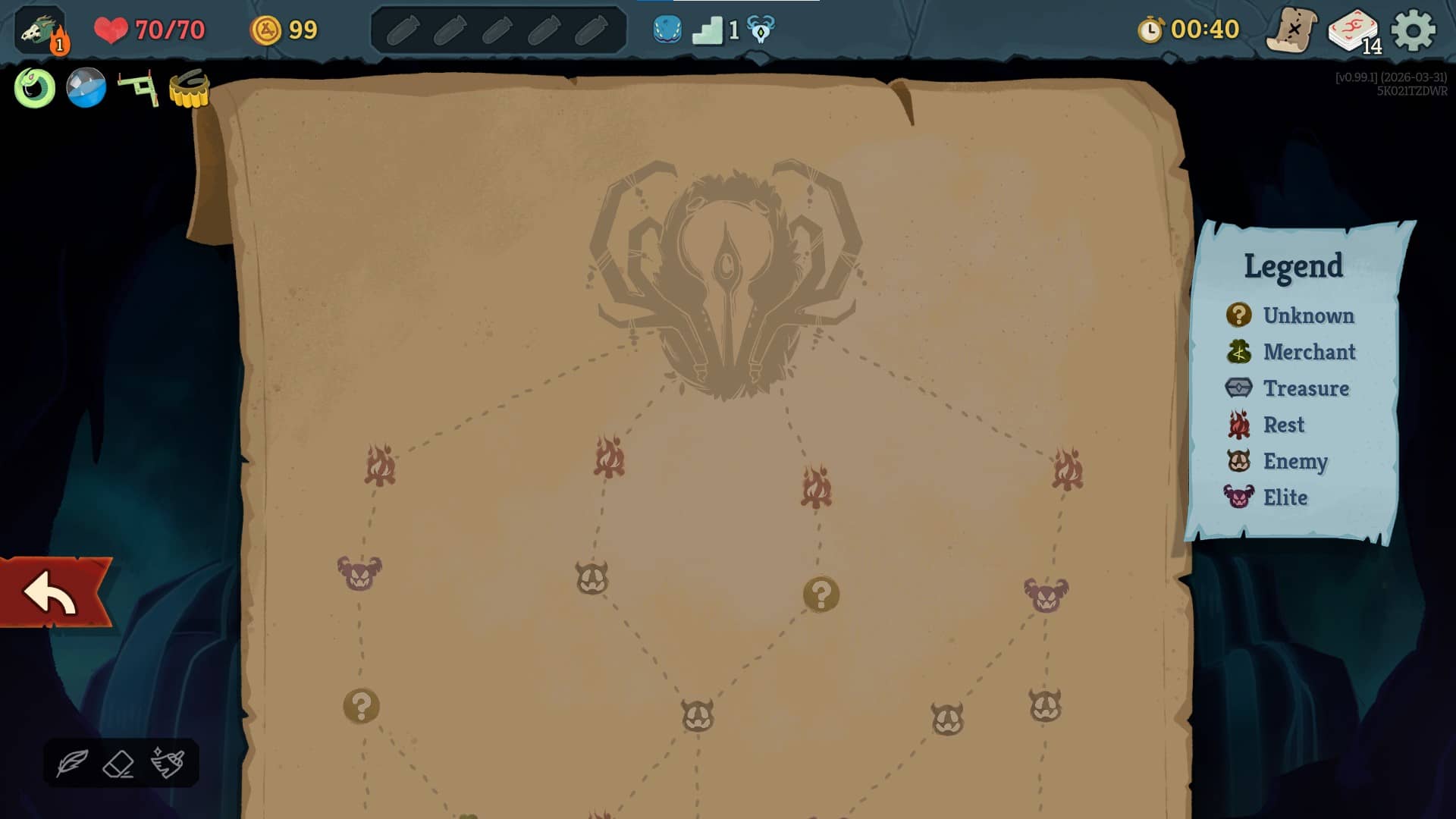
Hovering over an icon in the map legend highlights every instance of that encounter type on the current map, helping you plan your route at the start.
Plan Your Route Backward from the Boss
Contrary to what might be your first instinct, the best way to choose a path in Slay the Spire 2 starts at the top of the map, not the bottom. The first thing to do when a new act starts is scroll up and look at what boss you’re facing. Every decision you make on the climb should be tailored to surviving that specific encounter. Depending on which boss it is, you may need more damage, more block, or a specific answer to something like Strength scaling or multi-hit attacks.
Once you know the boss, build the path backward. You need to consider things like how long you want your path to be. More nodes mean more time to build your deck, but it also means more potential damage taken. You need to balance enemy encounters with reward nodes and rest sites where you can heal or upgrade your cards. The most impactful nodes you need to consider, however, are elite nodes.
When to Fight Elites (and When to Avoid Them)
Relics are among the biggest sources of power in the game. They provide passive bonuses across every fight, and defeating elites is the primary way to collect them. Aiming for two to three elite fights in Act 1 is a strong plan. Check our Slay the Spire 2 elites guide for a breakdown of what you’re up against and the relic database to understand what you’re fighting for.
Avoiding elites purely to preserve HP is a trap: you will end up at the boss weaker than you should be with a low relic count and little gold. Your health is a resource, and any health regenerated above your maximum has zero value, so spending some of it to bank a relic is the right call more often than not.
Context matters, though. If you’re heading into a boss with a deck that isn’t quite working yet and you’re already feeling lower on health than you’d like, skipping an elite is fine. The Ironclad can afford more risks in Act 1 thanks to his  Burning Blood relic healing after every fight. The Silent and Necrobinder are squishier by default and need a more complete deck before diving into them.
The rule of thumb is to fight elites when your deck can close the fight efficiently, and you have enough HP to absorb a bad draw. Skip them when you’re already hurting and heading into even more danger.
Flexible Paths vs Rigid Paths
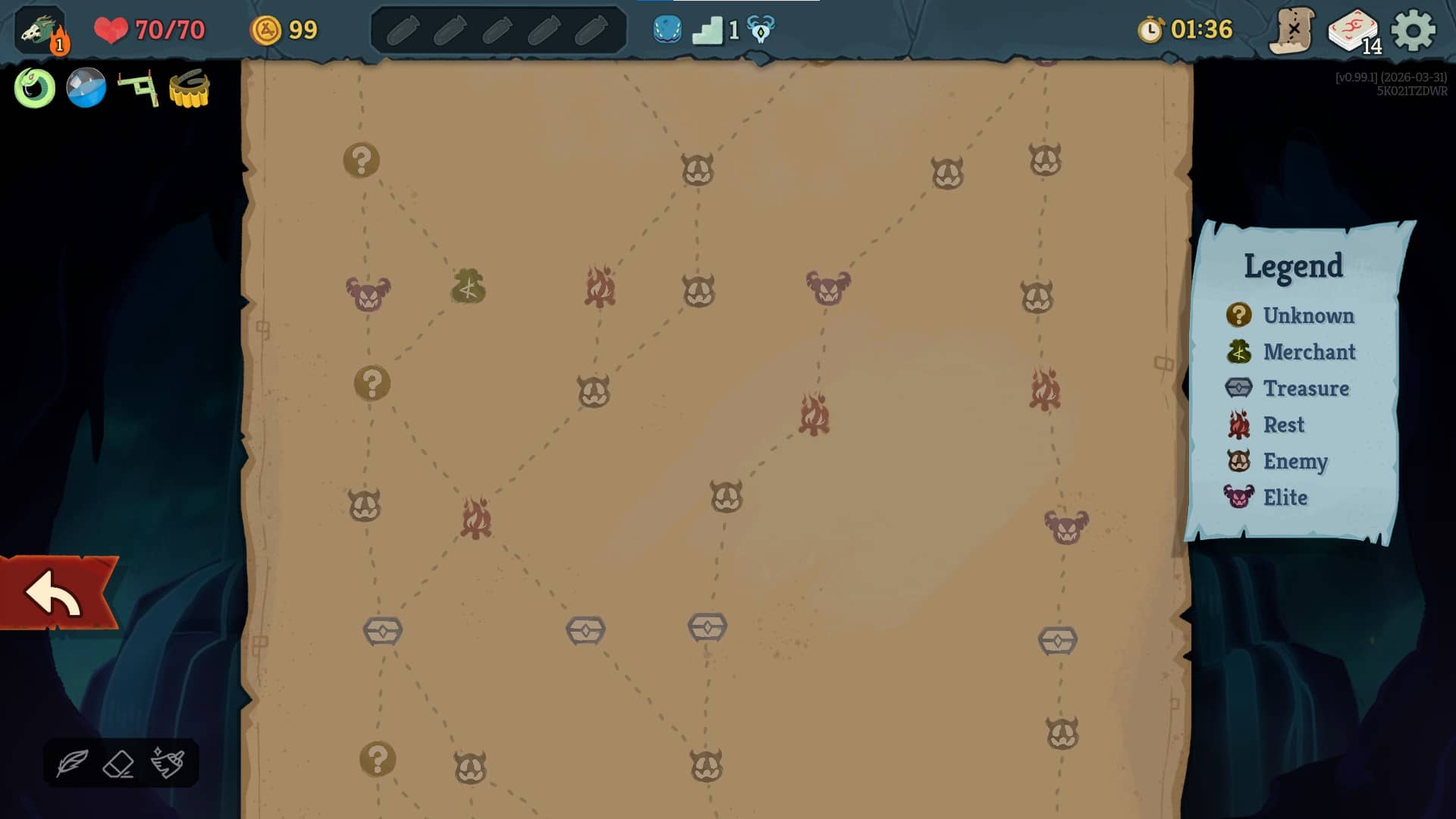
Finding the best route in Slay the Spire 2 isn’t only about hitting every elite or stacking the most fights; it can also be about keeping your options open. A flexible path is one where multiple branches converge and reconnect at various points. That way, if a fight goes badly and leaves you low on HP, you can pivot toward a rest site or a route with fewer encounters. A rigid path is one with a fixed sequence with no room to adapt or decisions to make.
When the two options look roughly equivalent, favor the one with more options. You want to preserve your ability to react to what happens after each decision and fight.
If you’re feeling relatively weak, try to look for paths where you can rest immediately before or after an elite. Upgrading a card at a campfire rather than healing is usually the stronger choice in most situations, but arriving at the boss critically low on HP could cost you the entire run. See our Slay the Spire 2 rest site guide for a full breakdown of how to use every campfire well.
Pathing Tips by Act
In Act 1, fight several normal enemies early to gain gold and card rewards before tackling elites. You want damage cards in hand quickly because a pile of basic Strikes won’t carry you through these fights. This is also where your deck identity starts to form, so take fights that generate card choices.
At the start of Act 2, you meet an Ancient who offers one of three blessings that can redefine the shape of your run. Consider these choices carefully, as they can often upgrade or completely brick your build if you aren’t careful. Beyond that, this act is all about balancing elite fights for relics against rest site access for recovery and upgrades, as enemies here hit harder.
By the time you reach Act 3, your deck should mostly be set. Focus on consistency, making sure your best cards are accessible when you need them, and prioritize rest sites for upgrades over healing whenever possible. You’re preparing to close out the run, not building.
The Spoils Map quest, explained
The Spoils Map is worth knowing about because it directly affects how you path through an entire act. It’s a Quest Card, and it is unplayable, meaning it just sits in your hand during combat. You can find it during The Legends Were True event in one of the question mark rooms.
Taking it marks a specific room in the next act with a red X. When you reach it, you collect 600 Gold, and the card is removed from your deck. Make sure not to remove it from your deck because you won’t get the rewards when you inevitably arrive.
Another map-related goodie is the Golden Compass floor starting bonus, which you can get from Tezcatara at the start of Act 2. It creates a unique floor map with a single path and a challenging boss, entirely removing your traversal choices.
The framework of planning a path doesn’t change much from run to run, which is why it’s beneficial to learn how to do it early. Look at the boss, count your encounters, fight elites when you’re strong enough, and always leave yourself room to adjust when things go sideways. There’s no one right answer to pathing; each one is a set of tradeoffs, and knowing what you’re trading for is what separates a good run from one that collapses in on itself.
Hungry for more Slay the Spire 2 knowledge? Be sure to check out our Getting Started guide!